Monday, 13 October 2014

Getting the Most from your Dog Walker

Here are some helpful tips for getting the most from your dog-walking service:


First and foremost, your dog walker is there for your dog to have fun, get some exercise, and be safe :)  Here are some friendly tips for ensuring the process goes smoothly.  Feel free to comment with tips of your own!
  • Please ensure your dog has ID tags with an up-to-date name and phone number, as well as rabies vaccine tag and city license tags.  Owners are responsible for any fines if the dog is found without a city license.  
  • Please ensure the dog has a properly-fitting collar.  The collar should not be able to slip on and off over the dogs head as this means it is loose enough for the dog to back out of it.  The collar should be tightened so that you can comfortably slide 2 or 3 fingers underneath it.  
  • Please provide a regular, 6-foot nylon leash, or let us know if you do not have one and we will supply one of our own.  While retractable leashes are tempting as they give the dog more room to roam and explore, they are dangerous and make it very difficult to control the dog should your dog-walker encounter an unexpected situation, such as an off-leash dog or a cyclist trying to pass on a narrow path.  Similarly, if the leash is too short, this prevents the dog from sniffing and getting the most enjoyment out of his walk.  
  • Be up-front and honest about your dog's health and behaviour.  Dog-walkers often walk many dogs in a day, so it is very important you let them know if your dog has anything that could be contagious.  You may need to cancel that day's walk, or your dog-walker may need to bring a change of clothes so as not to spread any illness to other dogs.  Your dog's health and safety are the first priority.
  • Don't be afraid to tell your dog-walker if your dog is reactive or has a challenging behaviour you are working with.  Knowledge will help your dog-walker be well prepared and keep everyone safe.  
  • If your dog pulls on leash, please provide a properly-fitted head-collar or anti-pull harness.  Your dog-walker wants your dog to enjoy his walk, not to be choking himself trying to pull his way down the street.  Ask for help if you are unsure as to what is the best tool for your dog or if you need help fitting the collar.  
  • If you have any questions or concerns at all, please ask!  Your dog-walker is there for your peace of mind and for your dog's enjoyment.  If you are ever unsure of anything or have any suggestions, don't be afraid to communicate with the owner or supervisor, they are there to help and ensure everything is to your satisfaction. 
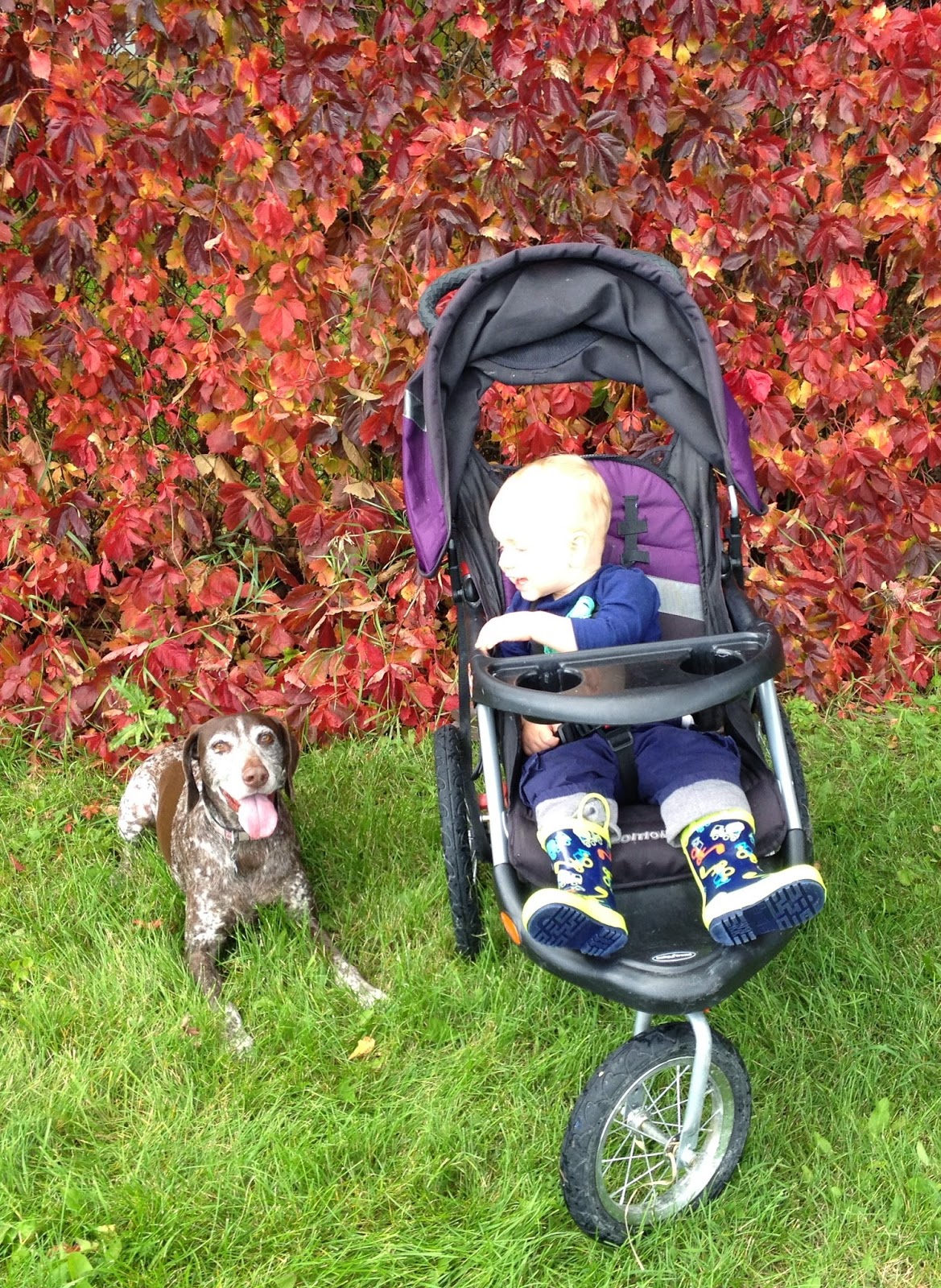
Please keep in mind that these are suggestions and not "rules" - you are your dog's advocate and are the final say in how your dog is cared for :)  Pawsitive Pet Care (formerly Sturgeon Park Pet Care) provides personalized notebooks to all our regular clients to facilitate communication between clients and their dog-walkers.  If you are a current client, please feel free to use those notebooks or contact Jillian any time.  Happy Thanksgiving and thank you for allowing us to do what we love!

Before You Hire a Dog-Walker:


If you're reading this blog and are thinking of hiring a dog walker for the first time, here are some suggestions for ensuring the right fit:

  • Ask questions about how they handle challenging behaviours such as jumping up, pulling on leash, barking at other dogs, etc.  Your dog-walker should know how to handle these in a safe and positive manner, without using harsh corrections or punishment on your dog.  
  • Ask for references from other clients, they should be more than happy to provide this for you.
  • Ask about insurance and bonding.  A professional service should have business insurance and bonding for employees. 
  • Ask how they would store your key.  Your key should not be stored with your address so that if the key is ever stolen it is not able to be matched with the house it belongs to.  
  • Ask how many dogs they walk at a time.  Although it is common in metropolitan cities for commercial dog-walkers to walk up to 8 dogs at a time (each municipality has its own laws about the maximum number of dogs), this is a potentially dangerous situation and may not be enjoyable for the dogs.  You want someone who can give individualized attention to your dog and to ensure he is safe and enjoying himself.
  • Ask about emergency situations.  Does the dog-walker have emergency pet first aid?  What would they do if your dog were sick or injured?  They should also be asking you about your dog's health information and should know where the nearest vet clinics are located. 
  • Ask about their off-leash policy.  Would the walker take your dog to an off-leash dog park?  While this may sound like a great opportunity for your dog to have a good time, are you 100% sure they would come back to your dog-walker if you weren't there?  What about the greater risks involved in visiting dog parks?  
As mentioned previously, having a dog-walker should bring you some peace of mind that your dog is getting company and exercise while you are busy at work or otherwise away from home, so you can come home from a long day at the office to a happy, relaxed pooch :) 


  To learn more about Pawsitive Pet Care's Dog Walking services, please visit PawsitiveCare.ca/Dog-Walking


  To learn more about us and read our reviews, please visit www.Facebook.com/PawsPetMB 

Tuesday, 1 July 2014

Thunder Phobia & Fireworks

Looking for professional pet care services? 

Visit our newly designed website at www.PawsitiveCare.ca

Originally posted on July 1, 2014

Happy Canada Day!


As much as many Canadian humans enjoy the festivities that come along with celebrating our nation's birthday, many dogs are afraid of the fireworks that are often part of the celebrations.

While we cannot prevent the fireworks, we can certainly make this potentially stressful night much easier on our canine companions.  Here are a few suggestions, and please feel free to add your own in the comments :)
  1. Close your windows and play the radio, TV, or some form of white noise to help drown out the noise of the fireworks.  Some studies have shown that talk radio, classical music, and other calm & soothing music works best to reduce stress.  
  2. Keep your dog indoors to prevent him from panicking and escaping from your yard, if he absolutely needs to go out, please go out with him and ensure your gate is secured.  If possible, take your dog for a nice, long walk earlier in the day to tire him out and let him get all his business done before dark.  
  3. Kennel train your dog so they have a safe place to go & hide.  If they are not kennel trained, allow them access to a comforting area.  Maddy likes to go in her kennel, but she also will curl up under the couch if we are sitting on it.  She has even curled up in the closet!  Some dogs hang out under the kitchen table or in their owner's lap.  Allow the dog to choose a preferred location and make it as quiet and comfy as possible.  Do not lock your dog anywhere, allow them freedom of choice.  
  4. A Thunder Shirt can be helpful for some dogs.  I won't go into this at length in this blog post, but I encourage you to do your own research on this and/or ask your veterinarian or professional dog trainer if you think this may be a good option for your dog.  
  5. Please do not be afraid to comfort your dog!  It is a myth that comforting a scared dog will reward his fear.  It is not possible to operantly condition fear, meaning we cannot punish the fear out of the dog, nor can we reward the fear and make it worse.  If your dog finds petting and cuddling comforting, please go right ahead.  If your dog prefers to be left alone and curl up somewhere quiet, please allow him to do so.  
    For more about classical conditioning and how positive associations can help reduce your dog's fear, check out our blog post on Pavlovian Conditioning (Classical Conditioning), called "Remember Pavlov?".  
  6. Desensitization & Counter-Conditioning.  This refers to helping to change how your dog feels about the loud noises.  Providing your dog treats and other things that he enjoys (play, attention, food, etc.) during fireworks can help your dog realize "this isn't so bad after all".  You can also do desensitization exercises by playing recordings of fireworks at a very low level (so low that your dog can barely hear it and does not react negatively), and pair this with reinforcing things (treats, toys, games, pets, whatever your dog enjoys).   
  7. Distract your dog and provide pleasant distractions to redirect his attention.  Stuffed Kongs or other "stuffable" interactive toys are a great tool.  Visit our Boredom Busters blog for more information on interactive toys.  

Kongs!  


Measure out one meal for your dog.


Mix in about a 1 /2 can of canned wet food.


No canned food on hand?  No problem, simply pour a small amount of water over your kibble - just enough to soften it - then let it sit for a few minutes while the water is absorbed.  


Spoon the mixture into Kongs and place in the freezer.  You can add a spoonful of peanut butter over the top to seal it off if you like.  I prefer to use all-natural peanut-butter with no sugar added.

Why the freezer?  This way the mixture freezes and takes longer for your dog to work through.  The bonus is that you can make up as many Kongs as you have as far in advance as you want and they will stay fresh in your freezer and are ready to go any time you need them.  This is fantastic for unexpected thunderstorms or any situation in which you need your dog to keep busy or distracted. 

If your dog gets frustrated with the frozen Kong and gives up, or if your pet finds the cold unpleasant, you can keep them in the fridge.  You can also freeze it while it's half-full and then add fresh when you take it out of the freezer.  By the time your pet works their way through to the frozen part, it will have begun to thaw and will be easier to eat.  

(For Reference, our Maddy gets 1 1/2 cups of kibble per meal.  This mixed with a 1/2 can of wet food filled two large Kongs and two small Kongs, plenty to keep her busy for quite some time!)

Other options for filling Kongs or other stuffable toys: 
  • canned pumpkin - high in fibre (make sure you get 100% pure pumpkin and not pie filling!)
  • all-natural peanut butter (keep in mind this is high in fat and be sure it does not contain xylitol) 
  • all canned wet food (without the kibble) can be done up more quickly if needed
  • anything safe that your dog enjoys - treats, left-over turkey, etc. 

Final step: serve and watch your dog enjoy :) 


 What NOT to do:
  • Please never punish your dog for being afraid, even if he has an accident in the house.  An angry owner is scary and will only increase your dog's fear.  You want to be the source of comfort and reassurance for your dog.  
  • Please never force your dog to "face his fear" by forcing him to be flooded by the fearful stimulus all at once.  Gradual counter-conditioning and desensitization can be done with the help of a compassionate and competent trainer and this process involves keeping your dog under threshold (comfortable enough that they are not showing signs of fear) and should be done with the guidance of a trained professional.   
  • Please never make your dog drowsy with sedatives.  Imagine you are afraid of spiders and one is crawling towards you, but you have been given a very strong medication and are so sleepy you are unable to get up and move.  Your dog may appear outwardly calm but could be panicking internally.  
  • There are some more appropriate medications that can certainly help with noise phobias, please talk to your veterinarian about these, but please never use sedatives.  A good, more in-depth article on this topic is available at http://fearfuldogs.com/acepromazine/

Jillian Enright, CPDT-KA

Visit our website for more information about Jillian and Pawsitive Pet Care.


For more information on dog behaviour, visit

    Wednesday, 28 August 2013

    My Eye-Opening Experience

    Originally Posted August 28 / 2013 


    Let me first start out by saying that I am sure there are excellent kennels out there.  People who love dogs, take excellent care of them, and may even be very knowledgeable about dog behaviour.  

    I will also say that, like in any industry in the world, there are some that are good and some that are not so good.  Because our dogs cannot speak to us in words, it is important that we advocate on their behalf, and be sure that we find one of the good ones.  We must be assertive about the type of care we expect and do our due diligence when selecting a kennel.

    Why did I climb upon my soap box today?  Two reasons:  1) We have to put our dog, Maddy, in a kennel this weekend, so I have some first-hand experience, and 2) A recent call from a client brought this issue back to the forefront for me.

    We are normally very fortunate and have been able to find friends to stay at our home when we go away, so Maddy has company and doesn't have to leave the comfort of her own familiar environment.  Unfortunately, it didn't work out that way for this coming long weekend, so we had to find her a kennel to stay in.

    Firstly, I was shocked at the cost.  I have done home-boarding and thought my home-boarding costs were slightly higher than a kennel, but that people were comfortable paying a little extra because of the warm home environment and the more frequent exercise and attention.  I was wrong.  Kennels are actually more expensive...  and the real shocker for me: You have to pay extra just to have your dog walked!  I have always operated under the assumption that exercise is secondary only to food, and as a basic need, is part and parcel of caring for dogs.  Apparently at most places walks are considered an add-on, so definitely ask about this before booking.

    Secondly, if you don't ask, they may not tell you.  Ask, ask, ask.  Don't be afraid to come across as an over-protective pet-parent.  I had a client who recently put his dog in a kennel for a week.  When the dog returned home, he was a nervous wreck: He was acting "off": not his playful self and he started pooping in the house when he had previously been fully house-trained.  When I asked the client what type of experience the dog had at the kennel, he told me that the kennel owners had put a shock collar on their dog and shocked him when he went after their cat.  Rather than keeping their cat safely away from the dog, they punished the dog for going after the cat.  They also walked him using a prong collar and used harsh corrections when he pulled on his leash.  When I asked the client if he had authorized these types of corrections, the client said "I don't know, I think so, I might have signed something..."  This poor man had put his trust in this place and assumed that they would treat his dog well...  but people's ideas of treating a dog "well" can be very different, so it's very important to get the details.

    I am sure that most kennels are excellent: clean, caring, safe environments.  I know for a fact that there are many kennel-owners and staff who are animal-loving people with huge hearts and do their best to provide a positive experience for the dogs who are away from their home and their people.  It's not about causing fear or anxiety around kenneling one's dog, it's about arming ourselves with information, asking the important questions, and advocating for our pets because they can't speak up for themselves.

    Okay, I will climb off my soap box for today and get started on my packing for the long weekend.  Wishing you all a safe and happy holiday!


    2017 Update:


    Some things to look for and questions to ask when visiting or inquiring at a potential kennel or boarding situation for your pet:
    • Do they have the necessary licensing and insurance?
    • Does the facility look and smell clean and sanitary?  Do they use proper cleaning protocols to reduce the risk of spreading illness between animals? 
    • Do they require proof of vaccination, including bordetella (kennel cough)?
    • How many animals to they house at once?  Do they have separate areas for smaller dogs?  How do they ensure the safety of the pets in their care?  Do they allow play time, and if so, how is it supervised?  
    • What is their maximum capacity, and what is their ratio of staff to dogs? 
    • What do they do if animals in their care display behavioural or health issues?  What is their emergency plan?  
    • How much time to they spend in a kennel and how much exercise do they get on a daily basis?  Are there extra costs for walks?  

    The boarding facility should also ask you important questions about your pet.  They should desire to know if your pet has any behaviour or medical concerns, if they're on a special diet, and they should ask questions about how to make their stay as comfortable as possible.  

    Some people offer boarding services out of their home.  This can be very a warmer, more comfortable environment for your dog, and can also ensure they get more attention and spend less time cooped up.  That said, someone taking dogs into their home should be held to the same standard as a boarding facility.  It is unsafe to have a large number of dogs in one home, especially dogs who don't know each other and are already under the stress of being away from their families.  

    The care provider should have excess animal permits if they are taking in more dogs than allowed by their local by-laws.  What is their plan if they get sick or injured, do they have assistance?  What do they do if the dogs get into a fight, or if someone becomes ill or injured?  What is their emergency plan?  How do they clean and sanitize their home environment to reduce the risk of spreading illness between dogs?  They should still require proof of vaccinations, including bordetella, as mentioned above and should still carry liability insurance.  

    Do the dogs still get walked?  How many dogs does the care provider walk at a time, and do they have a safety plan?  What happens if a dog gets away from them, do they have a plan for getting a dog safely home?  While a home boarding situation can be less stressful for your pets, the care provider should still be a professional who knows what they are doing and can give you concrete answers to any of your questions.  Ask for references and to see proof of their insurance coverage and always arrange to visit the location in advance to ensure you are comfortable with the arrangements.

    For information on our boarding services, please visit https://PawsitiveCare.ca/Boarding

    Unfortunately, the pet care industry (aside from veterinary medicine) is largely unregulated.  This means anyone can put up a shingle calling themselves a boarding and/or training facility.  Please exercise caution before selecting a pet professional.  For some tips on finding a compassionate, ethical, and qualified trainer, please see our blog post at http://pawsitivepooch.blogspot.ca/2016/04/finding-trainer.html

     Visit us on Facebook at www.Facebook.com/PawsPetMB

    Visit our website to learn more about us at www.PawsitiveCare.ca